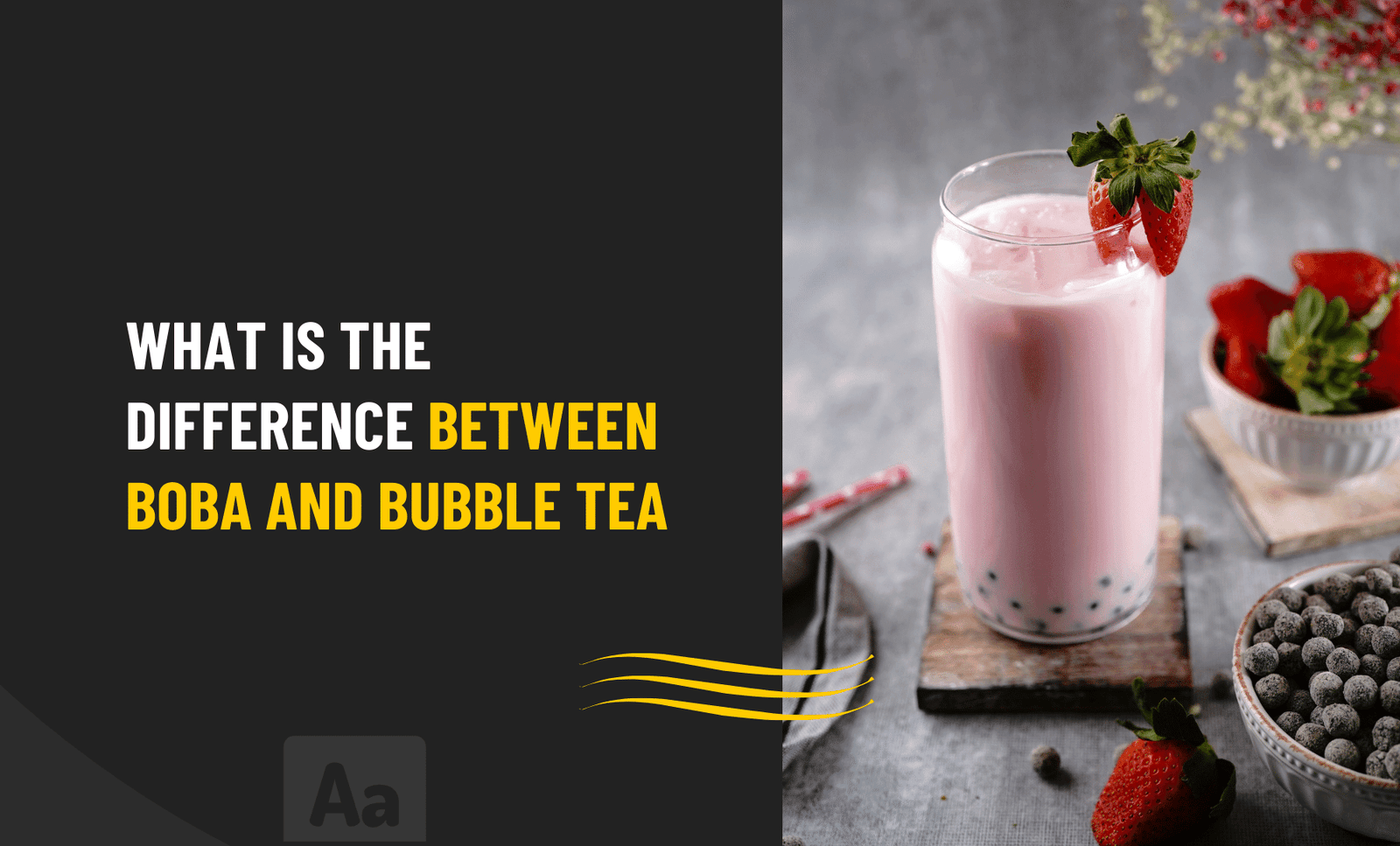
Bubble tea is a Taiwanese drink that combines a tea or flavoured base with milk or fruit, sweetness, ice and optional toppings. The classic topping is chewy tapioca pearls, but modern menus also use popping boba, crystal boba, fruit jelly and pudding. “Bubble tea” and “boba tea” usually describe the same family of drinks.
What is in bubble tea?
A bubble tea is assembled from choices rather than one fixed recipe. Most drinks have a base, flavour, sweetness level and topping.
- Base: black, green, jasmine or oolong tea; some drinks use a no-tea fruit or dairy base.
- Milk or fruit: dairy, a plant-based alternative, fruit syrup or fruit puree changes the style.
- Sweetener: sugar syrup, brown sugar or a flavoured syrup; many shops let you choose the level.
- Topping: tapioca pearls, popping boba, crystal boba or jelly.
Why is it called bubble tea or boba?
The names vary by place and context. “Bubble tea” can refer to the foam formed when a drink is shaken, while “boba” commonly refers both to tapioca pearls and to the finished drink. Read our focused comparison of boba and bubble tea terminology for the regional differences.
Main types of bubble tea
| Style | Typical base | Common toppings |
|---|---|---|
| Milk tea | Black, green, jasmine or oolong tea with milk | Tapioca pearls, pudding or grass jelly |
| Fruit tea | Brewed tea with fruit syrup or puree | Popping boba or fruit jelly |
| Brown sugar boba | Milk or milk tea with brown-sugar syrup | Warm tapioca pearls |
| Blended drink | Tea, fruit or milk blended with ice | Pearls, jelly or popping boba |
Our bubble tea flavour guide explains how popular choices differ.
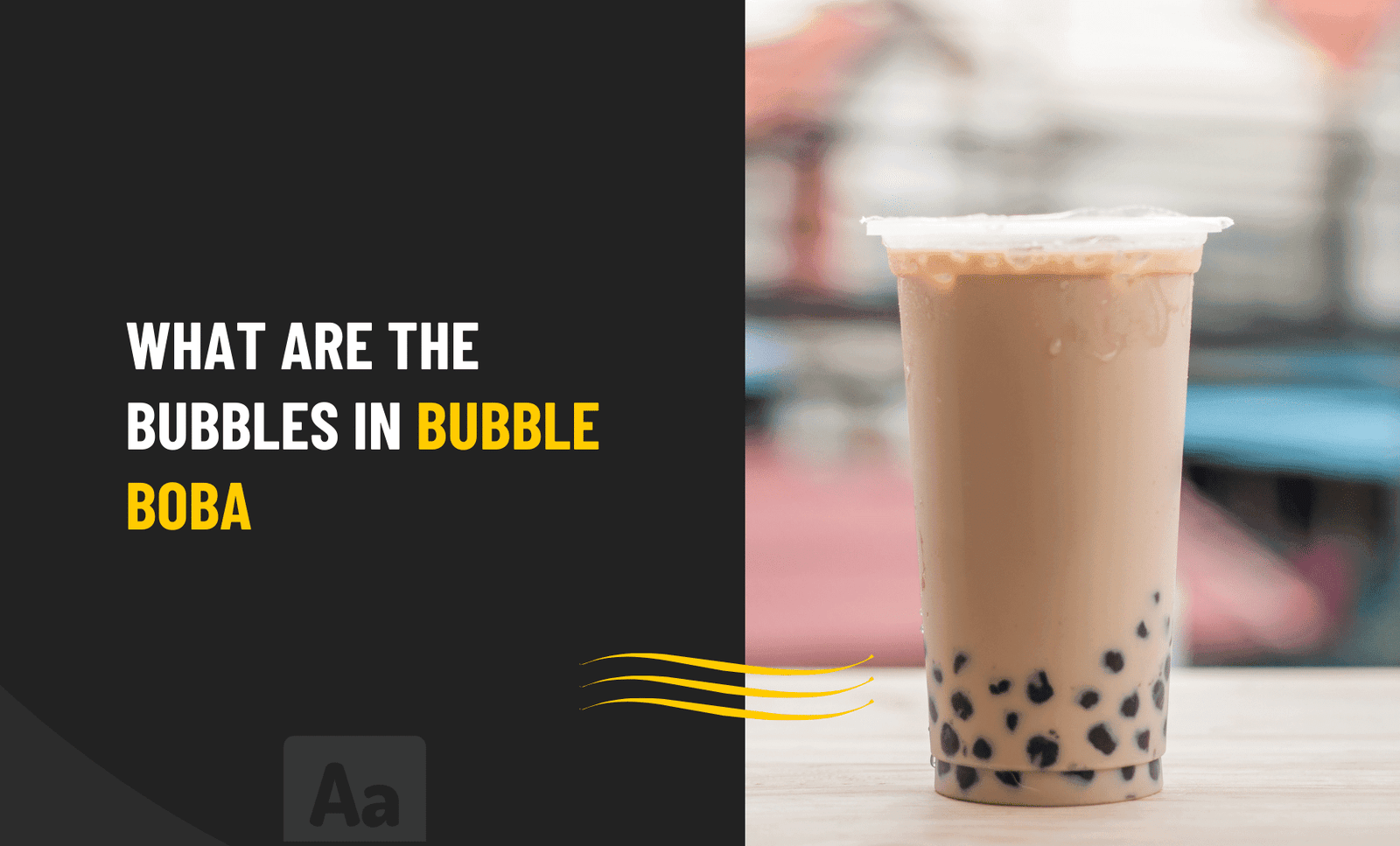
What are the pearls made from?
Classic dark pearls are mainly made from tapioca starch, which comes from cassava. They are cooked until chewy and usually held briefly in syrup. They are different from juice-filled popping boba and translucent agar- or konjac-based crystal boba.
Does every bubble tea contain tea, milk or caffeine?
No. Recipes vary. A tea-based drink normally contains caffeine, while a verified no-tea or caffeine-free base may not. Milk is optional, and plant-based alternatives are common. If caffeine, allergens or dietary needs matter, ask for the exact recipe rather than relying on the drink name. See our evidence-led guide to caffeine in bubble tea.
How to order bubble tea
- Choose milk tea, fruit tea or another base.
- Pick a flavour and cup size.
- Select a sweetness and ice level where offered.
- Add one topping that suits the texture you want.
- Check allergens and caffeine with the shop when relevant.
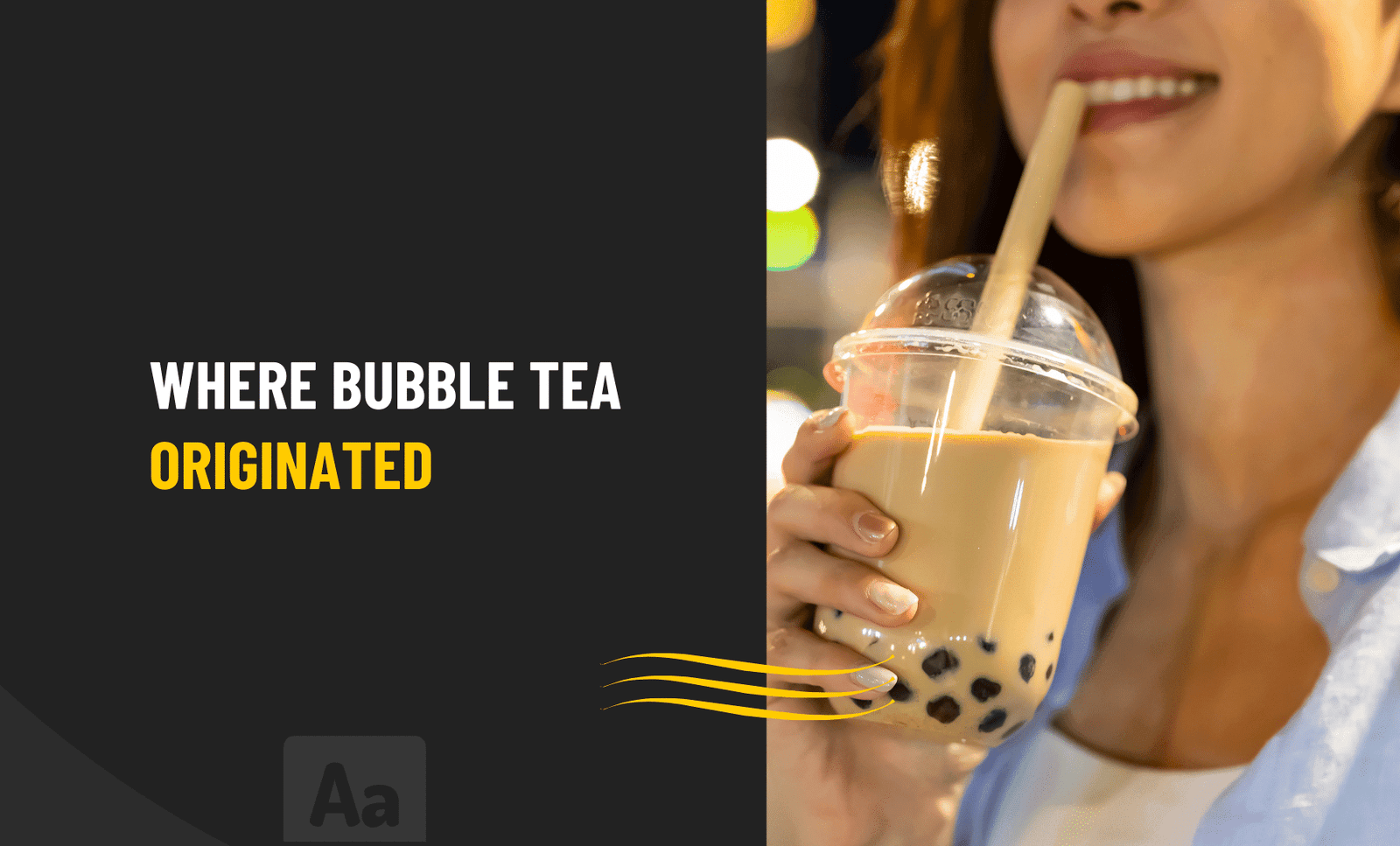
Where did bubble tea originate?
Bubble tea developed in Taiwan in the 1980s. Several businesses have been associated with its early development, so a responsible history distinguishes documented chronology from disputed inventor claims. Explore the history of bubble tea and our concise guide to where bubble tea originated.
Make or serve bubble tea
For home preparation, begin with our bubble tea recipe collection. Businesses can use our startup guide; event planners can explore bubble tea catering.
People also ask
- What are the bubbles in bubble tea made of?
- Tapioca pearls: cassava starch, water and brown sugar. The name itself comes from the foam on a shaken tea. Read the full answer
- What is popping boba made of?
- Fruit juice sealed in a thin seaweed-derived alginate skin, set with calcium — no tapioca and no gelatin. Read the full answer
- What is crystal boba?
- Translucent agar jelly pearls with a springy bite and roughly a third of the calories of tapioca. Read the full answer
- Crystal boba or tapioca pearls — which should you use?
- Crystal boba is lighter, clearer and holds texture for hours; tapioca gives the classic dense chew of a milk tea. Read the full answer
Building a boba business?
Our hands-on bubble tea training in London covers drink prep, machines, costing and menu build, taught by the team running our Fulham bar every day.