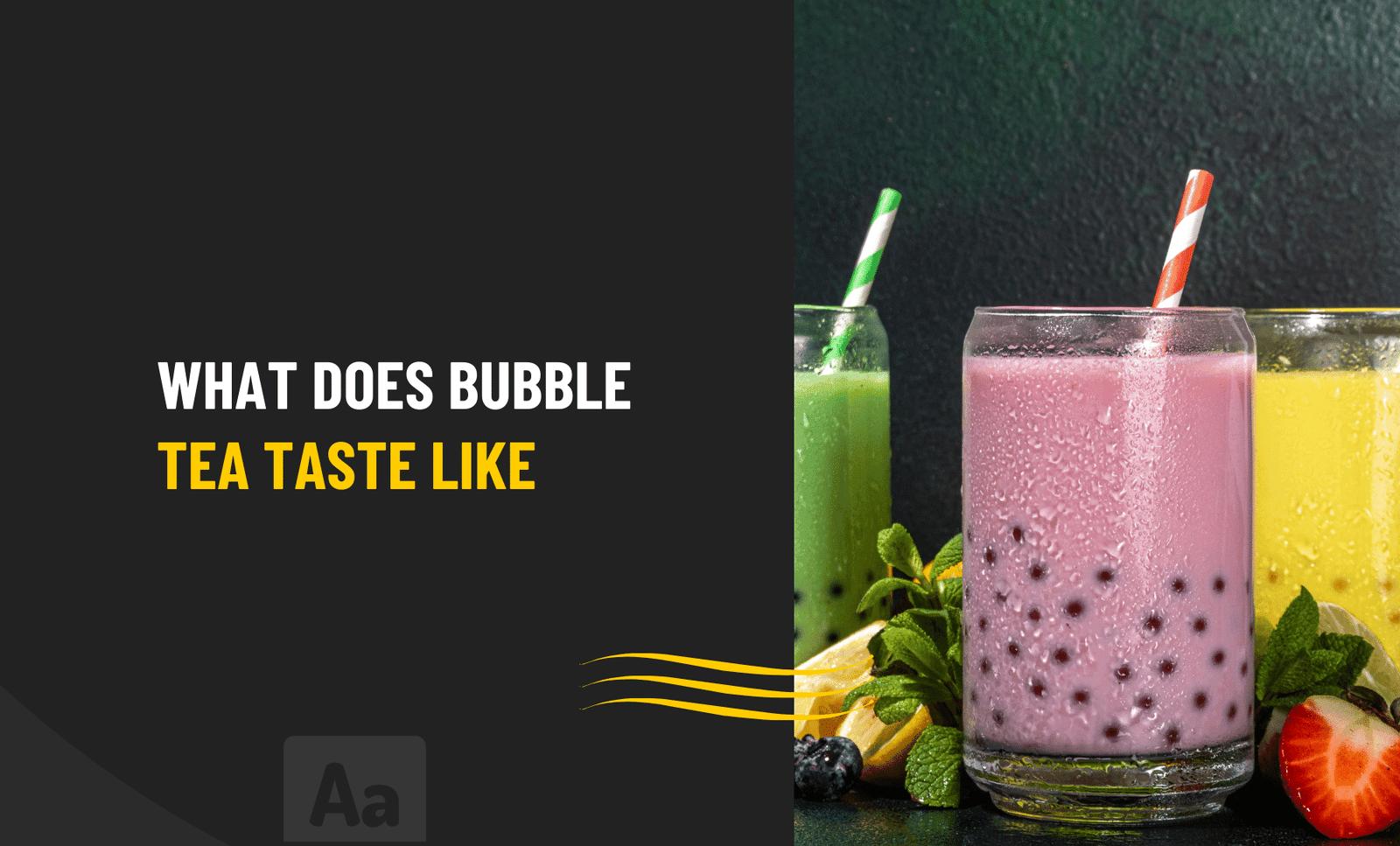
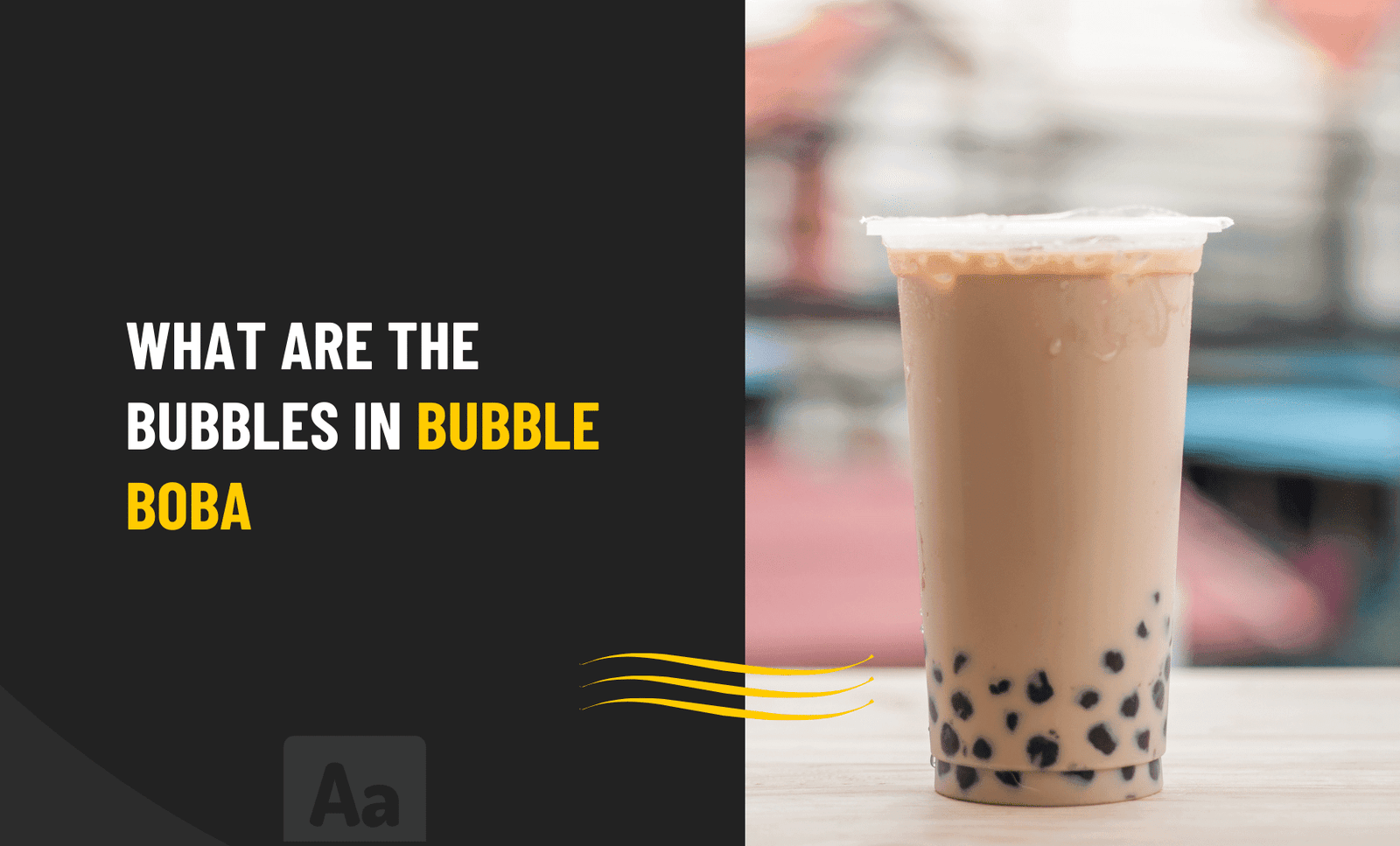
The chewy black balls in bubble tea are tapioca pearls, made from cassava root starch, water and brown sugar. Confusingly, the drink is not named after them: "bubble" originally referred to the foam produced when the tea is shaken with ice.
Two kinds of bubble
- The foam. Taiwanese shops in the 1980s shook tea, milk and sugar in a cocktail shaker, producing a layer of bubbles on top. That is where "bubble tea" comes from.
- The pearls. Tapioca balls sitting at the bottom of the cup, drunk through a wide straw. In Mandarin they are zhenzhu, pearls, which is why the drink is also called pearl milk tea or boba.
What tapioca pearls are made of
| Ingredient | Purpose |
|---|---|
| Tapioca starch (cassava root) | The body of the pearl and its chew |
| Boiling water | Gelatinises the starch so it can be kneaded |
| Brown sugar or caramel | Colour and flavour — this is why they are dark |
| Sweet potato starch (optional) | Extra elasticity in some brands |
That is the whole list. No gluten, no dairy, no gelatin, no caffeine. Cassava is a root vegetable grown across South America, Africa and Southeast Asia; the starch is washed out of it, dried and rolled into spheres.
Every topping you might find in the cup
| Topping | Made from | Texture |
|---|---|---|
| Classic black pearls | Tapioca starch and brown sugar | Dense, sticky chew |
| Crystal boba | Agar or konjac | Springy, translucent |
| Popping boba | Juice in an alginate skin | Bursts |
| Lychee or grass jelly | Agar or grass jelly herb | Soft cubes |
| Aloe vera | Aloe flesh in syrup | Crisp, slippery |
| Red bean | Sweetened adzuki beans | Soft and mealy |
| Pudding | Egg custard | Silky |
| Cheese foam | Cream cheese and milk | Salty foam cap |
Are the bubbles safe and are they vegan?
Tapioca pearls are vegan, gluten free and safe to eat. They are high in carbohydrate and low in nutrients — around 180–220 kcal per 100g cooked — so they add calories without much else. Cassava must be processed before eating, which commercial starch always is. Children should drink boba with a straw wide enough that pearls are not gulped whole.
Why the pearls are chewy
The chew is called QQ in Taiwan, a texture word with no direct English equivalent. It comes from gelatinised starch: boiling water breaks the starch granules open, and as the dough cools the chains re-bond into an elastic network. Cook too briefly and the centre stays chalky; too long and the pearl loses structure and turns to mush.
People also ask
- What is popping boba made of?
- Fruit juice sealed in a thin seaweed-derived alginate skin, set with calcium — no tapioca and no gelatin. Read the full answer
- What is crystal boba?
- Translucent agar jelly pearls with a springy bite and roughly a third of the calories of tapioca. Read the full answer
- Crystal boba or tapioca pearls — which should you use?
- Crystal boba is lighter, clearer and holds texture for hours; tapioca gives the classic dense chew of a milk tea. Read the full answer
- How is popping boba different from tapioca?
- Popping boba bursts with juice and needs no cooking; tapioca is boiled starch with a chewy bite and works hot. Read the full answer
Building a boba business?
Our hands-on bubble tea training in London covers drink prep, machines, costing and menu build, taught by the team running our Fulham bar every day.